From an operational perspective, global industry statistics highlight the scale of electromechanical risks within the maritime sector. According to loss prevention reports published by Allianz, failures involving propulsion and power generation machinery account for more than half of all reported marine incidents worldwide.
Within the recreational boating sector, data from the United States Coast Guard records thousands of incidents each year, resulting in hundreds of fatalities and direct property losses exceeding USD 88 million. These reports consistently identify operator inattention, lack of experience, and machinery failure as the primary contributing factors behind such incidents.
The importance of preventive maintenance and timely technical diagnostics is reflected in the high number of mechanical incidents reported each year throughout the maritime industry. Operational data from marine assistance organizations indicates that the majority of on-water service requests originate from mechanical failures that could have been mitigated through routine inspections and properly scheduled maintenance programs.
Among the most common causes are failures in the propulsion system, fuel supply problems, electrical and battery system malfunctions, and engine overheating. Collectively, these incidents account for the majority of technical emergencies affecting both recreational and commercial vessels, leaving an important concern unresolved: while you may be navigating with apparent peace of mind, your vessel could be developing an internal problem that grows day by day without being visible to the naked eye.
1. Biological infestation of fuel systems by microorganisms ("diesel bug")
Microbial contamination in diesel fuel tanks—commonly known in the marine engineering industry as diesel bug—is one of the most critical fuel system failures affecting modern vessels. The problem has become increasingly common with the widespread use of diesel blends containing Fatty Acid Methyl Esters (FAME) derived from biodiesel.
FAME is an organic compound with hygroscopic properties, meaning it readily absorbs moisture from the air trapped inside fuel tanks. As temperatures fluctuate in the marine environment, this moisture condenses on the internal tank surfaces before settling at the bottom due to its higher density, creating a stable water-to-fuel interface.
This interface provides an ideal environment for microorganisms—including bacteria, yeasts, and filamentous fungi such as Hormoconis resinae—to colonize and reproduce rapidly. Under favorable conditions, these microorganisms develop dense biofilms and produce dark brown or black sludge that accumulates along the bottom and inner walls of the fuel tank.
Once the propulsion system begins drawing fuel, this biological contamination is carried into the fuel supply circuit, rapidly clogging primary and secondary fuel filters. If left untreated, the contamination can restrict fuel flow, damage high-pressure common rail (HPCR) injection systems, accelerate wear of injection pumps due to reduced lubrication, and promote localized corrosion inside the tank through the production of acidic metabolic by-products.
Preventing microbial contamination requires regular fuel quality management and, when necessary, the application of dual-phase biocides specifically formulated to dissolve in both water and diesel fuel, such as Biobor JF. These treatments eliminate microbial colonies while also improving the lubricity of ultra-low sulfur diesel, helping protect injection pumps and fuel injectors.
Another highly effective strategy for minimizing this risk is the use of synthetic renewable fuels such as Hydrotreated Vegetable Oil (HVO). Because HVO contains no FAME components, it is significantly less susceptible to microbial growth, does not readily interact with water, and offers exceptional long-term storage stability compared with conventional biodiesel blends.
2. Sobrecalentamiento térmico del motor por fallos en los circuitos de refrigeración
Marine diesel propulsion systems rely on two interconnected cooling circuits to maintain safe operating temperatures. A closed-loop freshwater circuit containing coolant protects and cools the engine block, while an open-loop seawater circuit continuously draws raw water through a heat exchanger to remove excess heat from the closed system.
Engine overheating is one of the most damaging mechanical failures affecting marine diesel engines. Although it accounts for approximately 5% of major operational incidents, its consequences are often far more severe than many other mechanical faults due to the potential for irreversible engine damage.
One of the most vulnerable components within the cooling system is the raw water pump impeller, typically manufactured from neoprene or nitrile rubber. If the pump operates without an adequate water supply—often caused by air entering the intake, marine debris, plastic bags, seaweed, or a blocked seawater strainer—the impeller blades can rapidly deteriorate due to excessive friction and heat.
Detached impeller fragments are then carried through the cooling circuit, where they frequently become lodged within the inlet passages of the heat exchanger, restricting seawater flow and significantly reducing heat transfer efficiency.
At the same time, continuous operation in seawater promotes the gradual formation of mineral scale inside the heat exchanger tubes. As calcium-based deposits accumulate on the internal surfaces, they create an insulating barrier that further reduces cooling performance and causes engine temperatures to rise beyond the recommended operating limit of approximately 93°C (200°F).
If left unresolved, prolonged overheating can permanently warp the cylinder head, cause head gasket failure, allow coolant to contaminate the engine oil—producing the characteristic milky appearance—and, in severe cases, lead to piston seizure and catastrophic engine failure.
Routine inspection of the raw water circuit, periodic impeller replacement, heat exchanger cleaning, and proactive cooling system maintenance remain the most effective measures for preventing overheating-related failures and ensuring long-term engine reliability.
3. DC Voltage Instability and Battery Bank Failure
The DC electrical system is responsible for powering nearly every critical onboard function, including engine starting, navigation instruments, communication equipment, bilge pumps, and numerous auxiliary systems. Electrical instability and battery failures account for approximately 9% of marine assistance incidents, making them one of the most common causes of operational disruptions.
The primary cause of battery failure is the chemical degradation of lead-acid cells through a process known as sulfation. This occurs when batteries remain discharged or are stored for extended periods without a properly regulated smart charger. Over time, the amorphous lead sulfate formed during normal discharge transforms into stable crystalline deposits that permanently coat the battery plates, significantly reducing energy storage capacity and charging efficiency.
The marine environment further accelerates electrical deterioration. Continuous exposure to salt-laden air promotes corrosion of battery terminals and high-current electrical connections, forming non-conductive layers of copper oxide that appear as green or white deposits. This corrosion increases contact resistance, causing localized voltage drops during periods of high electrical demand. As a result, sensitive onboard electronics—including navigation systems, chart plotters, and VHF communications—may experience unexpected shutdowns, intermittent failures, or complete system resets.
At the same time, engine alternators are forced to operate under continuous thermal stress while attempting to recharge heavily sulfated battery banks with elevated internal resistance. This excessive workload can lead to premature voltage regulator failure, rectifier diode damage, reduced charging efficiency, and accelerated wear of alternator bearings and windings.
Routine battery load testing, charging system inspections, proper off-season battery maintenance, the use of UL 1426 tinned copper marine-grade wiring, and the application of dielectric grease to electrical terminals remain among the most effective engineering practices for preventing electrical failures and ensuring long-term system reliability.
4. Automatic Bilge Pump Failure and Flooding Risk
The automatic bilge pumping system serves as a vessel's primary defense against uncontrolled water ingress. Its reliability is critical for maintaining vessel safety, particularly while moored, where statistics indicate that approximately 69% of sinkings occur due to flooding that goes undetected or unmanaged.
Automatic bilge pump failure is commonly caused by the accumulation of debris, oil residues, and contaminants within the bilge compartment. Loose cable ties, fragments of wiring insulation, dirt, and emulsified oil sludge can become lodged inside the pump housing, mechanically obstructing the impeller and preventing normal operation.
When the impeller becomes jammed, the electric motor immediately experiences a significant increase in current draw. If the circuit is not properly protected in accordance with ABYC E-11 electrical standards, excessive heat can damage the motor windings. Conversely, if the protective fuse operates as intended, the pump becomes inoperative until the fault is corrected.
The automatic float switch remains one of the most failure-prone components within the bilge system. Grease, sediment, or corrosion can prevent the float from moving freely, leaving it permanently in the OFF position—allowing the bilge to flood without activating the pump—or continuously in the ON position. Prolonged dry operation can rapidly damage the pump's internal seals, allowing seawater to enter the motor housing and cause irreversible electrical failure.
Electrical performance can also be compromised by voltage drop within the bilge wiring. Poorly sealed electrical splices exposed to moisture and acidic bilge water gradually corrode, increasing circuit resistance and reducing the pump's effective flow rate well below its rated capacity. As a result, the system may be unable to remove incoming water quickly enough during an emergency.
Routine inspection of bilge pumps, float switches, electrical connections, and bilge cleanliness remains one of the most effective preventive maintenance practices for reducing flooding risks and ensuring reliable emergency operation.
5. Shaft Seal Wear and Water Ingress Around the Propeller Shaft
The point where the propeller shaft passes through the hull below the waterline is one of the most critical sealing locations in any marine propulsion system. Whether equipped with a traditional stuffing box or a modern dripless shaft seal, this assembly must maintain a reliable watertight barrier while allowing continuous shaft rotation under significant mechanical loads.
Traditional stuffing boxes rely on braided packing that requires a controlled seawater drip—typically three to four drops per minute while the shaft is rotating—to lubricate and cool the packing material. Mechanical failure often begins when operators overtighten the packing gland in an attempt to eliminate dripping while the vessel is moored. Without adequate water lubrication, friction rapidly increases, causing operating temperatures to exceed approximately 65°C (150°F). Excessive heat degrades the lubricating compounds within the packing, accelerates wear, and gradually cuts grooves into the stainless-steel shaft, making it increasingly difficult to achieve an effective seal.
Modern dripless shaft seals operate differently. These systems achieve watertight sealing by maintaining constant contact between a high-density carbon stator and a polished stainless-steel rotor attached to the rotating shaft. Proper sealing depends on continuous spring or elastomer compression and, in many installations, a constant supply of cooling seawater from the engine's raw water circuit.
If the cooling water supply becomes restricted, or if the vessel is towed while the propeller shaft rotates without engine-driven cooling water flow (freewheeling), friction surfaces can overheat within minutes. Excessive heat may crack the carbon sealing face, damage the elastomer bellows, and create a significant pathway for seawater intrusion into the vessel.
Routine inspection of stuffing boxes, dripless shaft seals, cooling water supply lines, and shaft alignment remains one of the most effective preventive maintenance practices for minimizing water ingress, extending component life, and ensuring the long-term reliability of the propulsion system.
6. Seacock Corrosion and Dezincification
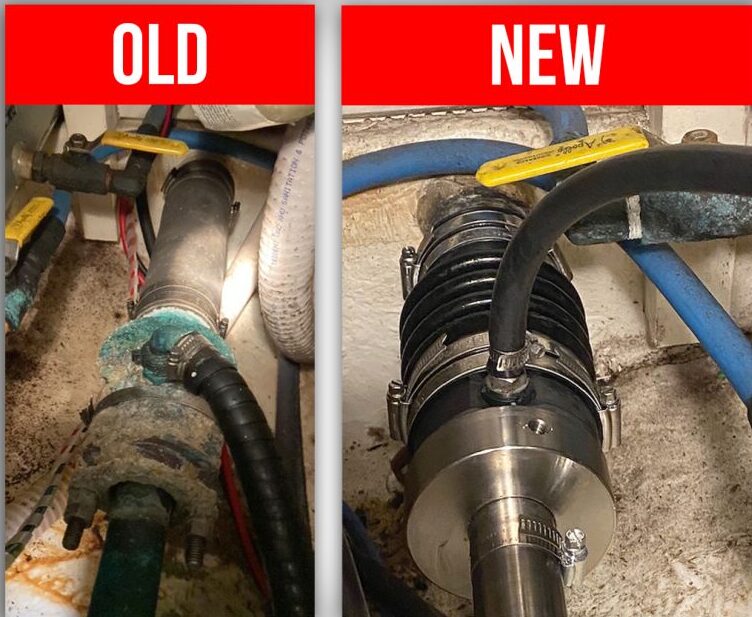
Seacocks regulate the intake and discharge of essential onboard fluids, including engine cooling water, generator supply, air conditioning systems, and wastewater discharge. Because these valves remain in continuous contact with seawater, they are exposed to one of the harshest corrosion environments found aboard a vessel. Failure of a seacock below the waterline can rapidly lead to uncontrolled flooding and represents one of the most critical structural risks in marine engineering.
One of the most severe failure mechanisms affecting traditional brass seacocks is dezincification. During this electrochemical process, seawater selectively removes zinc from the alloy, leaving behind a porous copper structure with dramatically reduced mechanical strength. Components affected by dezincification often develop a distinctive pink or reddish appearance, indicating significant loss of structural integrity. In this weakened condition, a valve body may fracture unexpectedly due to engine vibration, accidental impact, or even during normal operation of the valve handle.
Older gate valves, still found on many classic yachts, present additional reliability concerns. Marine growth, calcium deposits, and long-term corrosion can seize the internal gate mechanism, making the valve difficult or impossible to operate. Applying excessive force to the handwheel may fracture the threaded stem, leaving the actual valve position unknown during an emergency.
Modern marine engineering recommends the use of certified marine bronze, corrosion-resistant stainless steel where appropriate, or glass-reinforced composite seacocks , which are highly resistant to corrosion and immune to dezincification. Regular inspection, periodic operation of every seacock, and replacement of deteriorated components remain among the most effective preventive maintenance practices for protecting hull integrity and minimizing flooding risks.
7. Steering System Failure and Loss of Vessel Control
The steering system is responsible for maintaining precise directional control under all operating conditions. Whether hydraulic or mechanical, any failure within this system can significantly compromise vessel safety and reduce the crew's ability to perform emergency maneuvers.
In yachts equipped with hydraulic steering systems, the most common causes of failure are hydraulic fluid leaks resulting from worn cylinder seals, deteriorated high-pressure hoses, or loose hydraulic fittings. As hydraulic pressure is lost, air may enter the system, producing a spongy sensation at the helm, reducing steering responsiveness, and limiting the torque transmitted to the rudder stock.
Mechanical steering systems, commonly found on sailboats and smaller vessels, rely on stainless steel steering cables connected to the rudder quadrant through a series of pulleys and sheaves. Over time, insufficient maintenance can lead to cable fatigue, gradual stretching, corrosion, and excessive wear. If cable tension falls outside the manufacturer's recommended specifications, the cables may jump from their sheaves or disengage from the rudder quadrant, resulting in restricted steering movement or complete loss of directional control.
Many modern cruising yachts incorporate autopilot systems that connect directly to the rudder stock, providing an additional level of redundancy should the primary steering mechanism become compromised. In the event of a complete steering failure, emergency steering techniques—such as deploying steering warps from the stern—may provide limited directional control, allowing the vessel to maintain a safer course until repairs can be carried out.
Routine inspection of hydraulic hoses, steering cylinders, cable tension, pulleys, rudder quadrants, and emergency steering equipment remains one of the most effective preventive maintenance practices for ensuring dependable vessel control and reducing the risk of steering failure at sea.
8. Lightning Strikes and Electrical System Damage
Lightning strikes represent one of the most destructive electrical hazards affecting modern yachts. While a direct strike does not always compromise the vessel's structural integrity, it can generate extremely high transient voltages that propagate throughout onboard DC and AC electrical systems, as well as integrated communication networks such as NMEA 2000 and marine Ethernet.
Even nearby lightning activity can induce powerful electromagnetic surges capable of damaging sensitive electronic equipment. GPS receivers, chartplotters, radar systems, autopilots, gyro stabilizers, battery chargers, inverters, engine control modules, and communication equipment are all particularly vulnerable to these transient overvoltages.
One of the greatest challenges following a lightning event is that not all damage is immediately apparent. High-energy electrical pulses may weaken insulation inside electric motors, alternators, wiring harnesses, sensors, and electronic control units without causing an immediate failure. These hidden defects often develop into intermittent electrical faults or complete component failures days or even weeks after the original event.
Modern lightning protection systems reduce these risks by providing a controlled low-resistance path that safely directs lightning current toward the surrounding seawater through dedicated bonding systems and external grounding plates. Additional protection can be achieved through properly installed surge protection devices (SPDs), bonding inspections, and disconnecting shore power connections whenever severe electrical storms are expected.
Following any lightning strike or suspected surge event, a comprehensive electrical inspection—including insulation resistance testing, verification of onboard electronics, and thermal imaging of critical electrical circuits—should be completed before the vessel is returned to normal operation.

9. Onboard Fires Caused by Electrical Failures and Fuel Leaks
Fire is one of the most destructive emergencies that can occur aboard a vessel. Although less frequent than many mechanical failures, onboard fires can spread rapidly throughout engine compartments and enclosed spaces, causing severe structural damage and placing both the vessel and its crew at immediate risk.
One of the most common sources of electrical fires is the shore power connection. If the shore power cord is not properly secured with its locking ring, constant movement caused by wind, waves, and vessel motion can loosen the electrical contacts inside the inlet. Over time, this movement reduces the effective contact area, increases electrical resistance, and generates excessive heat when supplying high-demand equipment such as air conditioning systems, battery chargers, or water heaters.
Additional fire hazards include loose electrical terminals, overloaded circuits, deteriorated insulation, and corroded connectors, all of which can produce localized overheating through the Joule effect. As temperatures rise, cable insulation may melt, potentially igniting surrounding combustible materials within the engine room or electrical compartments.
Fuel and lubricating oil leaks also represent a significant ignition hazard. Diesel fuel, hydraulic oil, or engine oil leaking onto turbochargers, exhaust manifolds, or other high-temperature engine components can ignite under extreme operating conditions, particularly when routine inspections and preventive maintenance have been neglected.
Routine inspection of shore power systems, electrical distribution panels, wiring, fuel lines, hose connections, exhaust insulation, and onboard fire suppression equipment remains one of the most effective preventive maintenance practices for reducing fire risks and protecting both the vessel and its occupants.
10. Grounding and Propulsion System Damage
Accidental groundings remain one of the most common incidents affecting recreational vessels, particularly in shallow coastal waters, narrow channels, and unfamiliar marinas. Even low-speed contact with the seabed can transmit significant impact forces throughout the vessel's underwater structure, affecting not only the hull but also critical propulsion and steering components.
The first components typically damaged during a grounding are the propeller, propeller shaft, rudder, and cutlass bearing. Even a minor impact can bend the shaft by a few thousandths of an inch, creating vibration throughout the drivetrain. Continued operation under these conditions accelerates wear on shaft seals, transmission bearings, engine mounts, and couplings, potentially leading to expensive secondary failures.
More severe groundings may compromise the hull laminate, keel attachment points, rudder stock, or stern tube alignment. In some cases, structural damage remains hidden beneath the hull surface and only becomes apparent after water intrusion, abnormal vibration, or progressive mechanical wear develops over time.
Following any grounding event, a complete underwater inspection should be performed before the vessel returns to normal operation. Propeller condition, shaft alignment, rudder movement, cutlass bearing clearance, hull integrity, and drivetrain vibration should all be carefully evaluated to identify hidden damage before it develops into a more serious mechanical failure.
Routine navigation updates, depth awareness, proper route planning, and immediate post-grounding inspections remain essential preventive measures for protecting the propulsion system and ensuring the long-term reliability of the vessel.
The failures discussed throughout this article represent some of the most common mechanical and operational issues affecting recreational vessels and cruising yachts worldwide. While each onboard system has its own vulnerabilities, most of these problems share the same underlying cause: inadequate preventive maintenance, normal component wear, and the absence of regular inspections.
Routine maintenance allows small issues to be identified long before they develop into costly repairs, unexpected downtime, or situations that compromise the safety of both the vessel and its crew. From fuel and cooling systems to steering, electrical installations, and hull components, every system plays a critical role in ensuring safe, reliable, and efficient operation.
At Diesel Premier, we believe that the best repair is the one that never becomes necessary. Our team provides specialized diagnostics, preventive maintenance, and professional marine engineering solutions designed to keep every vessel operating at peak performance while minimizing the risk of unexpected failures.
If you require expert advice, a technical inspection, or professional marine support, our specialists are ready to help you keep your vessel operating safely and confidently wherever your journey takes you.
Need Professional Marine Assistance?
Whether you require preventive maintenance, engine diagnostics, electrical troubleshooting, or emergency technical support, the Diesel Premier team is ready to help.