The Launch Ramp Nightmare Every Boater Dreads
You've been waiting for this weekend since the day you winterized your boat.
The weather forecast is perfect. The cooler is packed, the kids are excited, and you've been picturing this first day on the water for months.
You back the trailer down the launch ramp...
climb aboard, turn the key…
Nothing.
Maybe the engine cranks once before falling silent. Maybe it sputters and dies. Or perhaps it doesn't respond at all while a line of impatient boaters begins to form behind you.
What should have been the highlight of your spring suddenly turns into frustration, embarrassment, and an unexpected call to a marine mechanic.
The truth is, engines rarely "fail overnight."
Most spring breakdowns begin months earlier, quietly developing while your boat sits in storage.
Moisture finds its way into the fuel system. Batteries slowly lose their ability to deliver starting power. Rubber components harden. Corrosion builds inside electrical connections. Even cooling system parts can lose their effectiveness without the engine ever being started.
The good news?
Spring commissioning takes time, but it’s time well spent. A properly prepared boat is safer, more reliable, and way more enjoyable than one that’s thrown together at the last minute. Plus, catching small problems early prevents them from becoming expensive repairs mid-season. Marina 21 Group()
Nearly every one of these problems is preventable.
A thorough spring recommissioning isn't simply another maintenance chore—it's the difference between enjoying your first weekend on the water and spending it waiting for roadside assistance at the boat ramp.
Whether you own an outboard, an inboard, or a sterndrive-powered boat, this guide will walk you through the systems that deserve your attention before the season begins.
More importantly, you'll discover the Hidden Heroes of your boat: inexpensive components that quietly protect thousands of dollars' worth of equipment every time you head out on the water.
Because sometimes, the smallest parts protect the biggest investments.
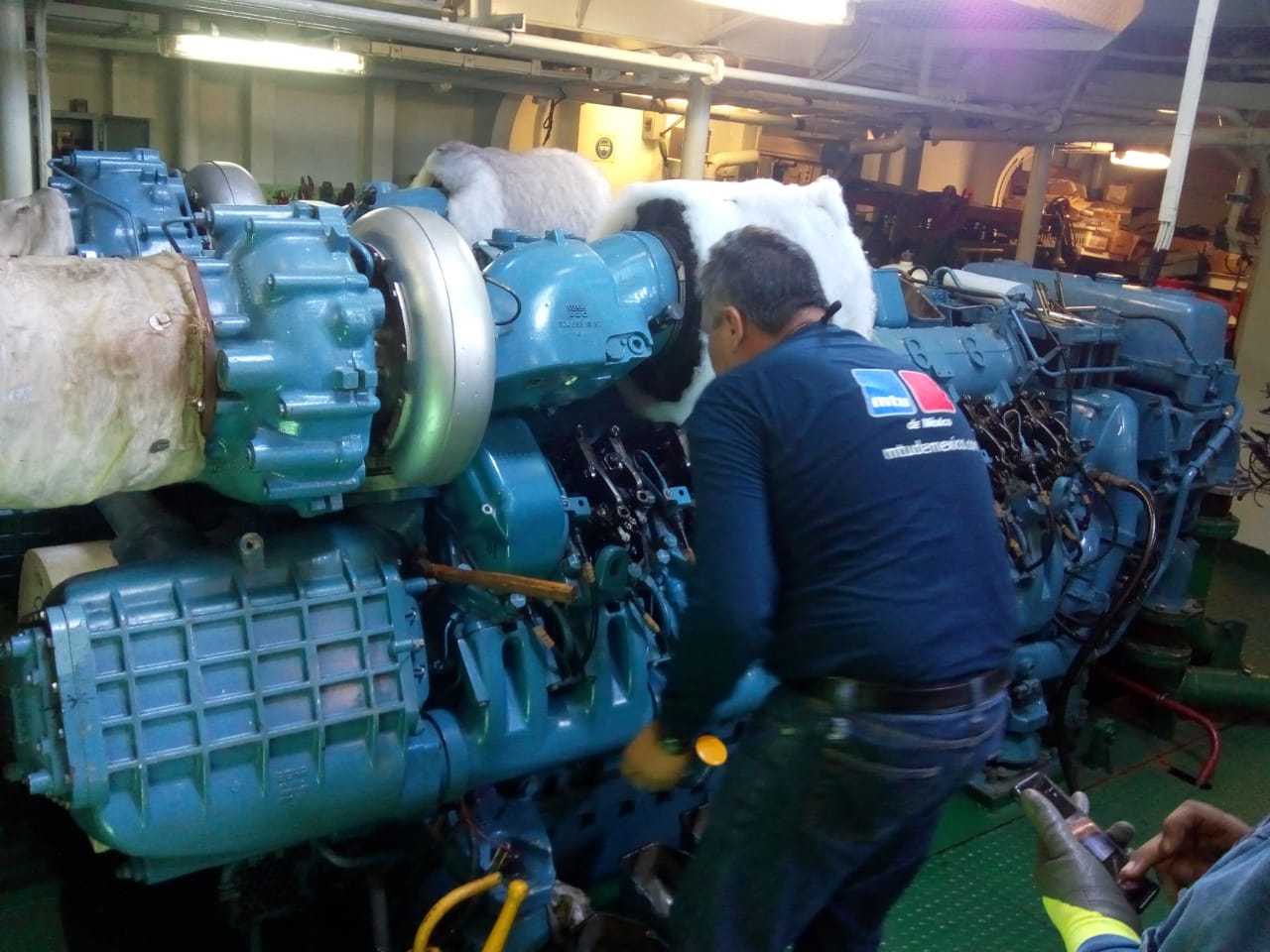
Why Winter Storage Is Tougher on Your Boat Than You Think
It's easy to assume that an engine sitting in storage isn't experiencing any wear.
After all, if nothing is moving, what could possibly go wrong?
Diesel Premier Insight
Storage doesn't stop wear.
It simply changes the type of wear your boat experiences.
In reality, winter storage creates an entirely different kind of stress.
Marine engines are designed to operate regularly. Oil circulates through internal components, seals remain lubricated, fuel stays fresh, and electrical connections are constantly energized.
Once an engine sits unused for several months, those protective processes stop.
Instead, moisture begins to accumulate inside fuel tanks and engine compartments as temperatures rise during the day and fall at night. Salt residue left behind from previous outings continues attracting humidity, accelerating corrosion. Rubber hoses and seals gradually lose flexibility, while contaminants settle inside lubricants and fuel systems.
Think of it like an athlete during the off-season.
Without regular movement, muscles stiffen, joints lose flexibility, and returning to peak performance requires preparation—not simply showing up on game day.
Your boat works exactly the same way.
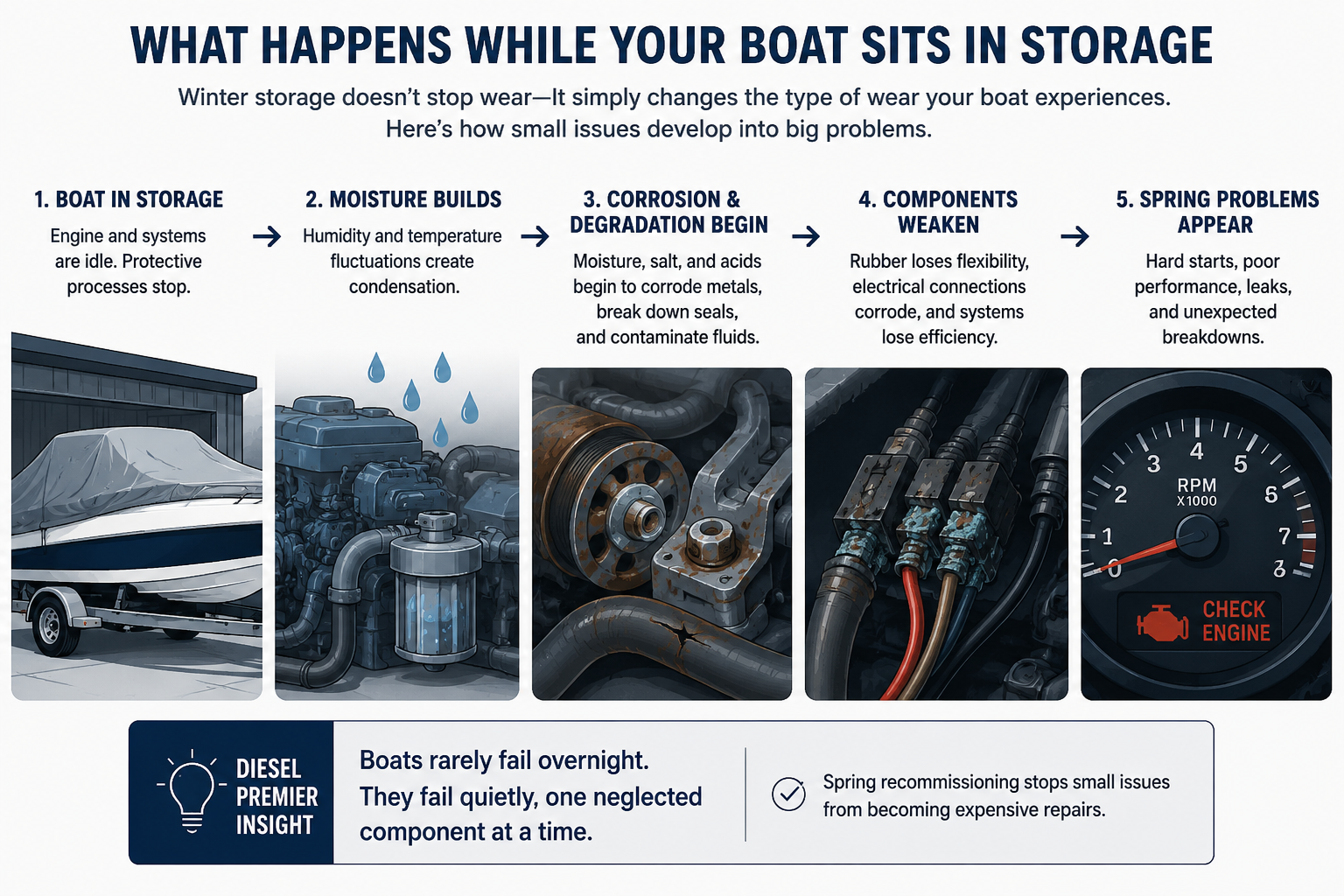
That's why recommissioning isn't about fixing problems.
It's about preventing them before they have the opportunity to ruin your season.
Different Boats, Different Priorities
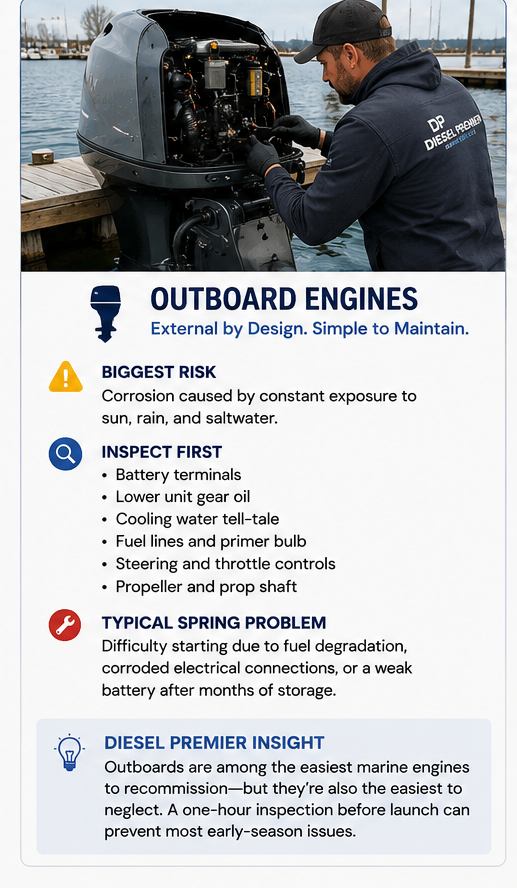
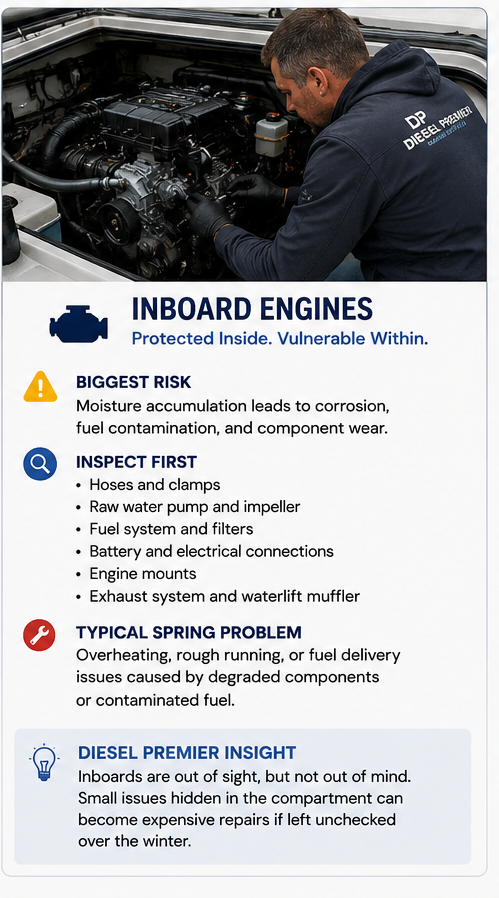
Every boat benefits from a preseason inspection, but not every propulsion system requires the same attention.
Understanding where each type of engine is most vulnerable allows you to spend your maintenance time where it matters most.
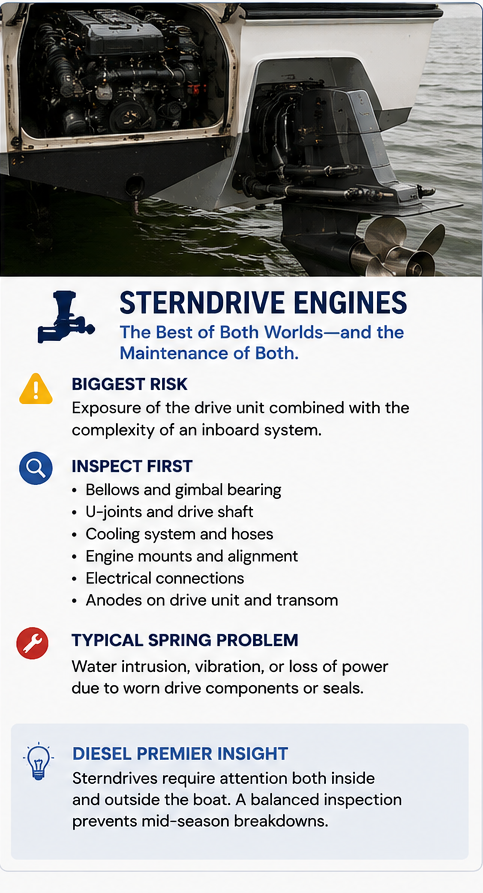
Meet Your Boat's Hidden Heroes
Most people assume catastrophic engine failures begin with expensive components.
In reality, the opposite is often true.
Some of the most costly repairs in boating start with inexpensive parts that were overlooked during routine maintenance.
Throughout this guide, we'll highlight these Hidden Heroes—small components that quietly protect your engine, drivetrain, cooling system, and fuel system every time you're on the water.
Ignore them, and they can become the weakest link in your boat.
Maintain them, and they'll help deliver years of reliable performance.
Let's begin with one of the most misunderstood systems on any boat.
Your fuel system.
 Hidden Hero #1: Your Fuel System Doesn't Forget Winter
When most boat owners think about fuel, they think about quantity.
Is there enough in the tank for the season?
What many don't consider is whether the fuel itself is still healthy.
Modern gasoline—especially blends containing ethanol—can become one of your engine's biggest enemies after months of winter storage. Unlike your car, which is typically driven every week, your boat may sit untouched for months. During that time, fuel continues to change.
The Vinaigrette Effect
Think about a bottle of homemade vinaigrette.
Shake it, and the oil and vinegar blend into what looks like a perfectly uniform mixture. Leave it untouched for a while, however, and the ingredients naturally separate into distinct layers.
Ethanol-blended gasoline behaves much the same way.
As temperatures fluctuate throughout the winter, moisture enters the fuel tank through its ventilation system. Ethanol absorbs that moisture until it reaches its limit. Once it can no longer hold any more water, the mixture separates.
The heavier combination of water and ethanol sinks to the bottom of the tank—exactly where your fuel pickup is located.
That means the first thing your engine may receive on launch day isn't clean gasoline.
It's the very mixture capable of causing rough starts, injector corrosion, fuel pump damage, and poor engine performance.
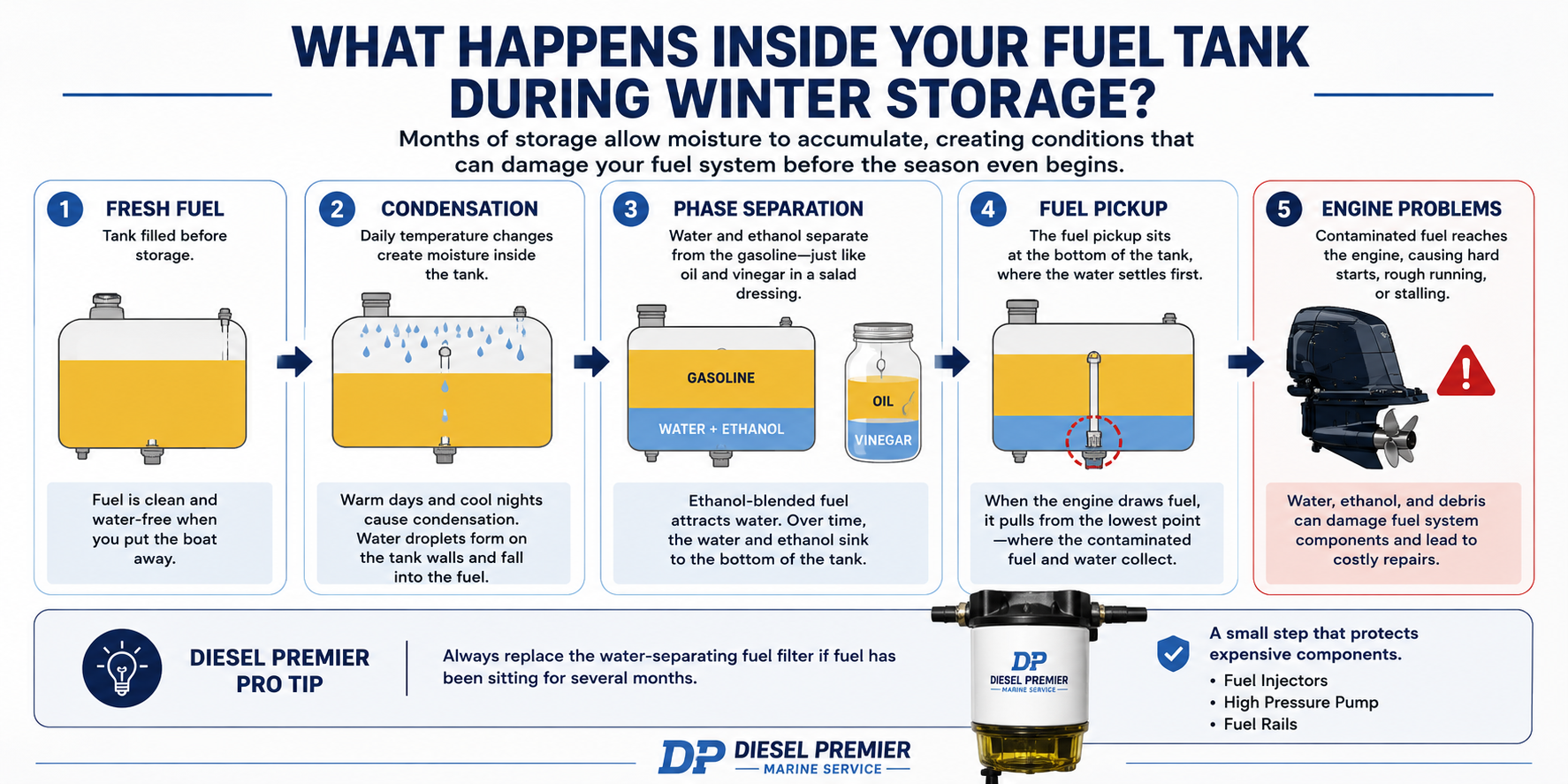
The good news is that this problem is almost entirely preventable.
Before your first outing of the season, inspect your fuel, replace the water-separating fuel filter, and use a quality marine fuel stabilizer if the fuel has been stored for an extended period.
Diesel Premier Insight
Fuel problems rarely appear without warning. Hard starting, rough idling, or hesitation during acceleration are often early signs that your fuel system deserves attention before a minor issue becomes an expensive repair.
Now that your fuel system is ready, let's move to another component that often appears healthy until the exact moment you need it most.
Hidden Hero #2: Your Battery May Look Healthy—Until You Turn the Key
Few things are more frustrating than arriving at the launch ramp only to discover your engine won't start.
In many cases, the culprit isn't the starter motor.
It isn't the ignition switch.
It isn't the engine.
It's the battery.
The surprising part is that a failing battery often gives very little warning.
It may still power your electronics, illuminate the dashboard, and even show more than 12 volts on a meter.
Yet the moment the starter motor demands hundreds of amps, everything changes.
The Silent Enemy Inside Every Battery
Imagine an old water pipe.
From the outside, it looks perfectly normal.
Inside, years of mineral deposits gradually reduce the amount of water that can flow through it.
A battery experiences something remarkably similar.
During long periods of inactivity, lead sulfate crystals slowly build up on the battery plates. This natural process, known as sulfation, increases internal resistance and reduces the battery's ability to deliver the high current needed to start an engine.
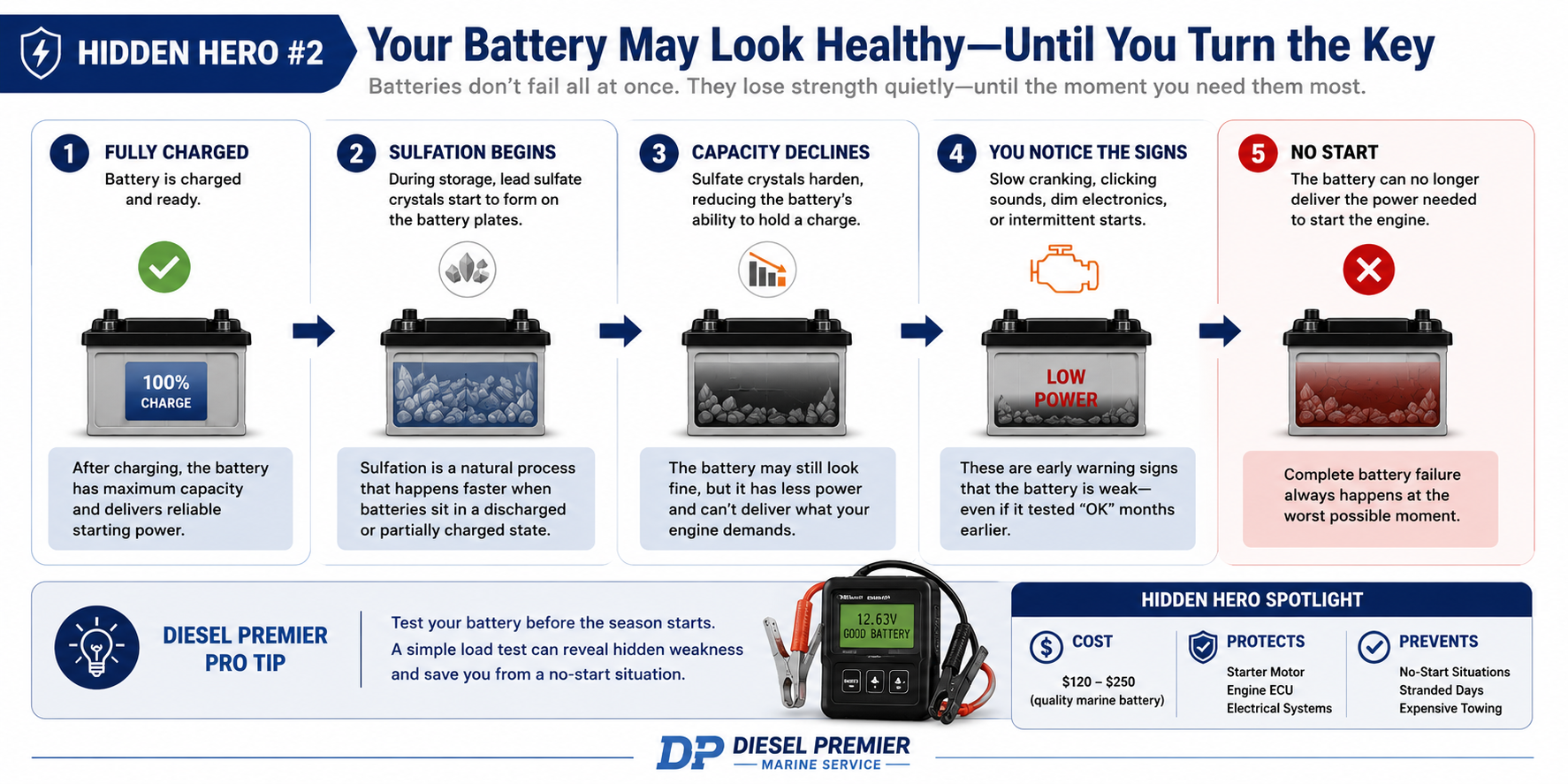
That's why a battery can appear healthy one moment—and completely fail the next.
Voltage tells only part of the story.
A proper load test reveals whether the battery can actually perform under real operating conditions.
Hidden Hero #3: The $30 Part That Can Save a $10,000 Engine
Some of the most expensive engine failures begin with one of the least expensive parts on your boat.
The water pump impeller is a small rubber component responsible for circulating cooling water through your engine. Without it, temperatures rise quickly—and so does the repair bill.
The problem is that impellers don't have to break to stop doing their job.
The Desk Fan Analogy
Imagine leaving a small plastic desk fan pressed against a wall for six months.
By spring, the blades would no longer spring back to their original shape. They'd develop a permanent bend after sitting under constant pressure.
That's exactly what happens inside your boat's impeller.
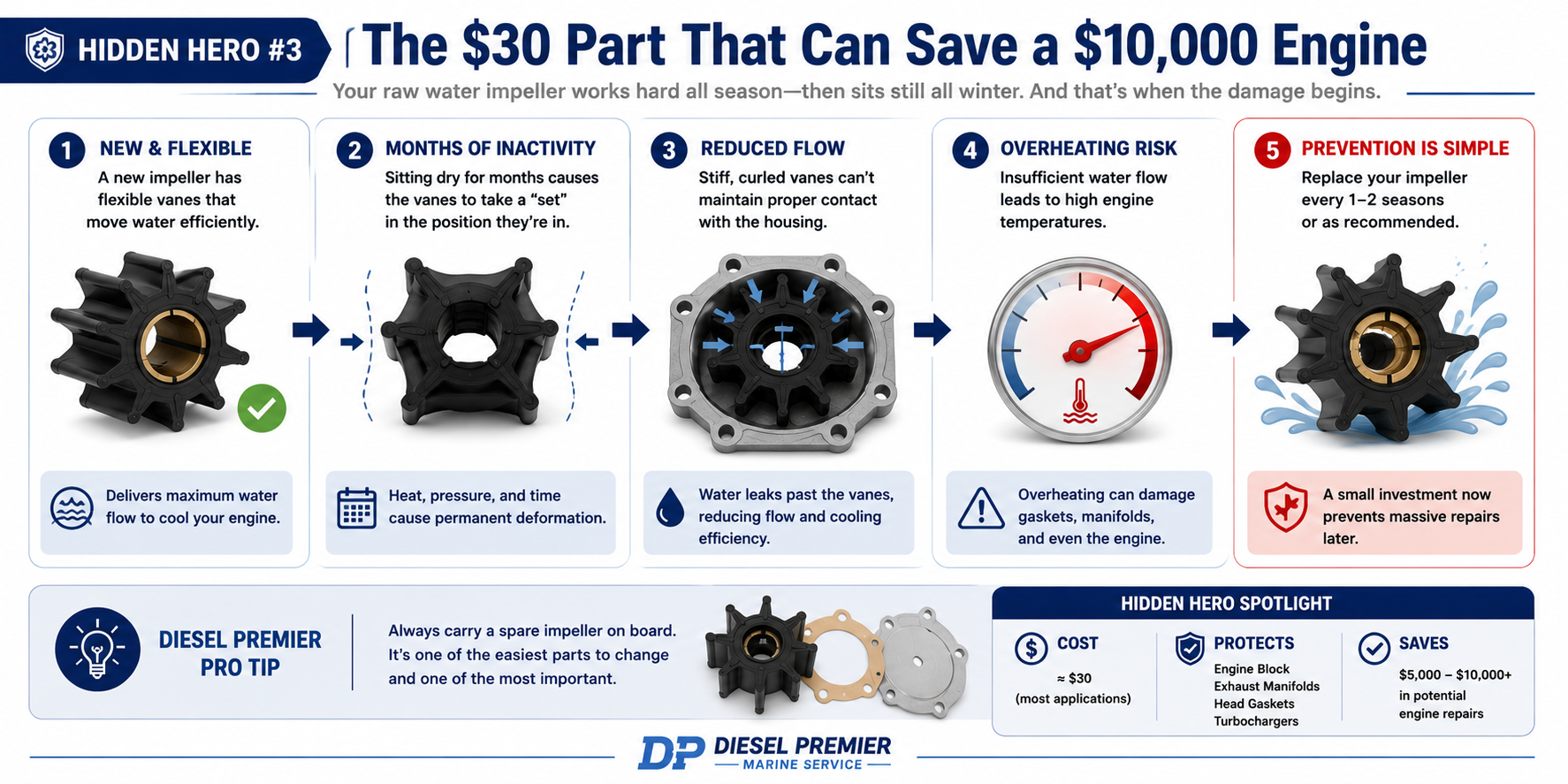
During winter storage, the flexible rubber vanes remain compressed in the same position. Over time, they lose elasticity and their ability to move water efficiently. Even if the impeller looks intact, it may no longer provide the cooling your engine depends on.
In the worst-case scenario, brittle vanes break apart and travel through the cooling passages, restricting water flow and creating hot spots that can severely damage the engine.
Replacing an impeller is inexpensive.
Replacing an overheated engine isn't.
Diesel Premier Insight
Water Pump Impeller
Approximate Cost: Around $30
Potential Savings: Engine repairs that can easily exceed $10,000.
Few maintenance items offer a better return on investment.
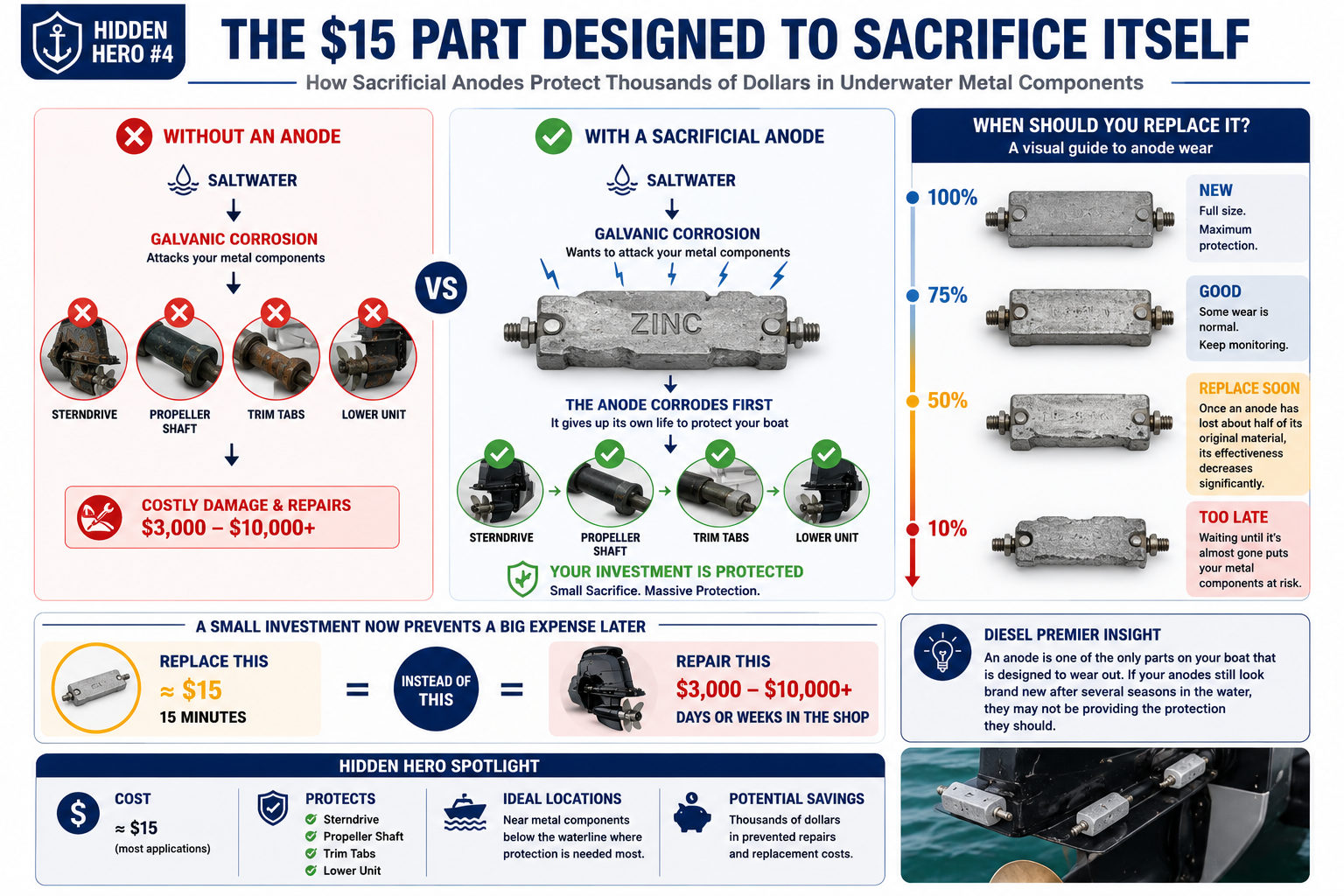
Hidden Hero #4: The $15 Part Designed to Sacrifice Itself
Corrosion never takes a day off.
Fortunately, one small component is designed to fight it every hour your boat is in the water.
Sacrificial anodes.
These simple pieces of zinc, aluminum, or magnesium perform an extraordinary job. Instead of allowing galvanic corrosion to attack expensive underwater metal components, the anode corrodes first.
In other words, it gives up its own life to protect your sterndrive, propeller shaft, trim tabs, or lower unit.
It's one of the few parts on your boat that is supposed to wear out.
If your anodes still look brand new after several seasons, that may actually indicate they're not providing the protection they should.
As a general rule, replace them once they've lost roughly half of their original material.
Waiting until they're completely gone defeats their entire purpose.
Diesel Premier Insight
Anodes don't fail because they're defective.
They fail because they're doing exactly what they were designed to do.
Hidden Hero #5: Don't Overlook Your Sterndrive Bellows
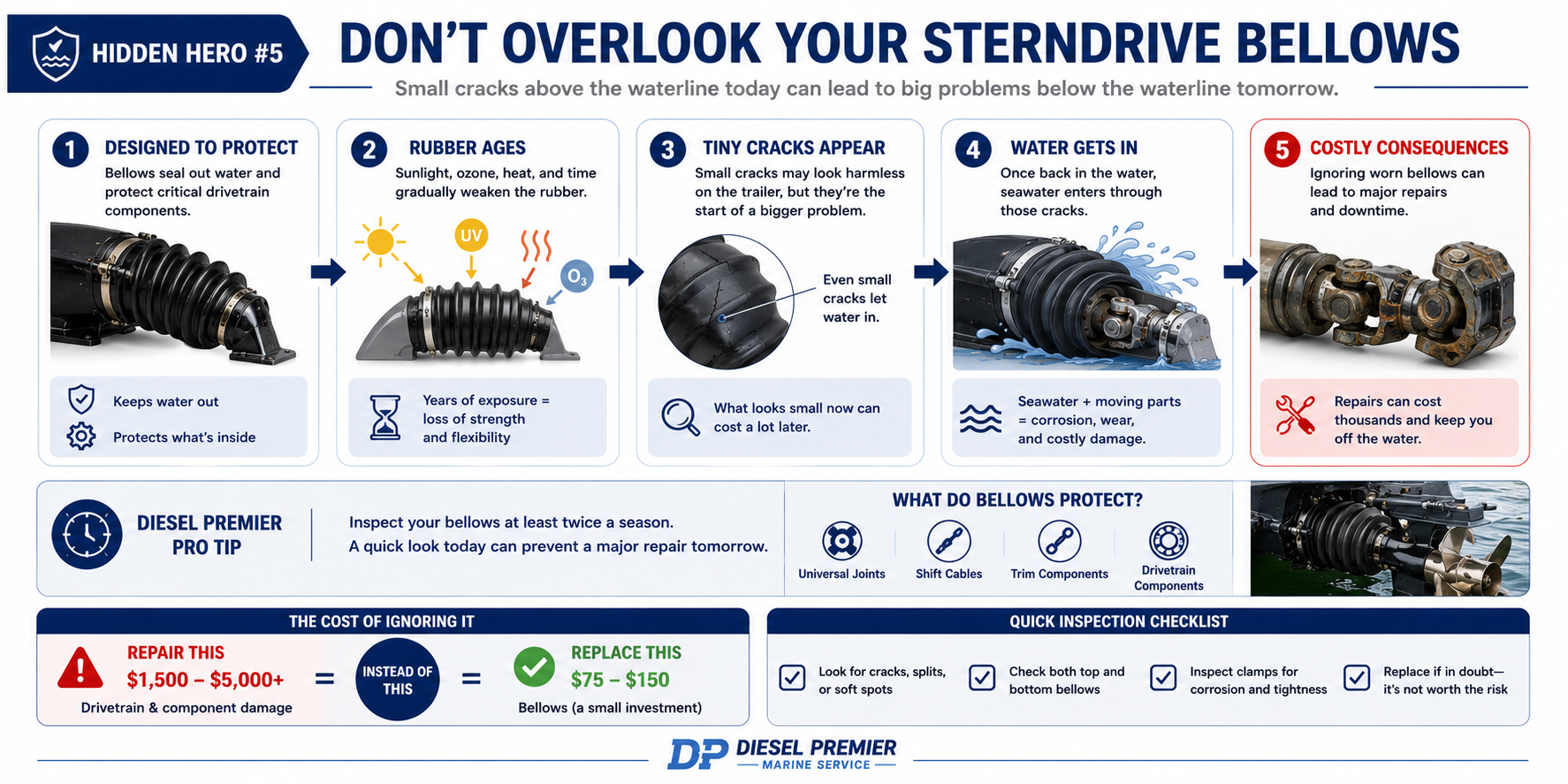
If you own a sterndrive-powered boat, few inspections are more important than checking the bellows.
These flexible rubber boots keep water away from universal joints, shift cables, and other critical drivetrain components.
Unfortunately, rubber ages.
Sunlight, ozone, heat, and time gradually weaken the material until small cracks begin to appear.
Those tiny cracks may seem harmless while your boat sits on the trailer.
Once it's back in the water, however, they become an open invitation for seawater.
A routine inspection takes only minutes.
Ignoring worn bellows can lead to repairs costing thousands.
Before You Turn the Key
A few simple checks can make the difference between a successful start-up and an avoidable breakdown.
Before starting the engine for the first time this season:
•Inspect the bilge for fuel, oil, or water leaks.
•On gasoline-powered boats, run the bilge blower for at least four minutes.
•Verify that the battery is fully charged.
•Confirm there will be cooling water flow before starting.
•Ensure the emergency engine cut-off switch (ECOS) is functioning correctly.
•Check for a strong flow of cooling water from the discharge outlet (tell-tale) immediately after starting.
•Allow the engine to reach operating temperature while monitoring the gauges for any abnormal readings.
The first few minutes tell you more about the condition of your engine than almost any other time during the season.
Listen carefully.
Watch the instruments.
Do not ignore warning signs.
If you aren't ready to start just yet, don't worry—download our checklist for a more thorough inspection.
Final Thoughts
Every experienced boater has a story about the season that almost didn't happen.
Sometimes it was an old battery that chose the worst possible moment to fail.
Sometimes it was contaminated fuel after a long winter.
Sometimes it was a worn impeller that looked perfectly fine—until the engine overheated miles from shore.
Rarely are these failures caused by bad luck.
More often, they're the result of small maintenance items that were easy to overlook.
That's why the Hidden Heroes in this guide matter.
They're inexpensive.
They're easy to inspect.
And they quietly protect some of the most valuable systems on your boat.
Spending a few hours on spring recommissioning can save thousands of dollars in repairs, prevent lost weekends on the water, and give you something every boat owner values:
Confidence.
Because the best boating memories don't begin when you leave the dock.
They begin with the preparation you made long before you turned the key.
Need professional assistance?
If you prefer to leave the servicing in the hands of experienced marine technicians, the Diesel Premier team is here to help.
Schedule Your Service